


Eleven years ago, after two days of driving through the remotest parts of Madagascar, I stopped at a roadside shack. It sold two things: Coca-Cola and the chance to charge your phone.
That image has stayed with me ever since. As a provocation, not as curiosity.
After more than a decade working across Africa, the Middle East, and South Asia, I have come to see that image as a parable for something far larger: the persistent failure of Western institutions to recognise expertise that does not arrive in a familiar form. Nowhere is that failure more consequential right now than in the domain of foreign interference and narrative warfare. Three dynamics are worth paying attention to.
The language that blinds us
We have long organised the world around a comforting fiction: that progress moves in a straight line and that some markets are further along the same path. The very language we use encodes this assumption. “Developing” markets. “Emerging” economies. Labels that position entire continents as works in progress, waiting to catch up with a Western template that was never as stable as we pretended.
Saussure argued that words don’t describe reality; they structure how we perceive it. “Developing” doesn’t just label a market. It closes our eyes to what it might be teaching us.
In many ways, these markets are ahead, because of their complexity, not despite it. Nowhere is this more apparent than in the domain that now sits at the centre of European anxiety: foreign interference and narrative warfare.
Europe’s rude awakening
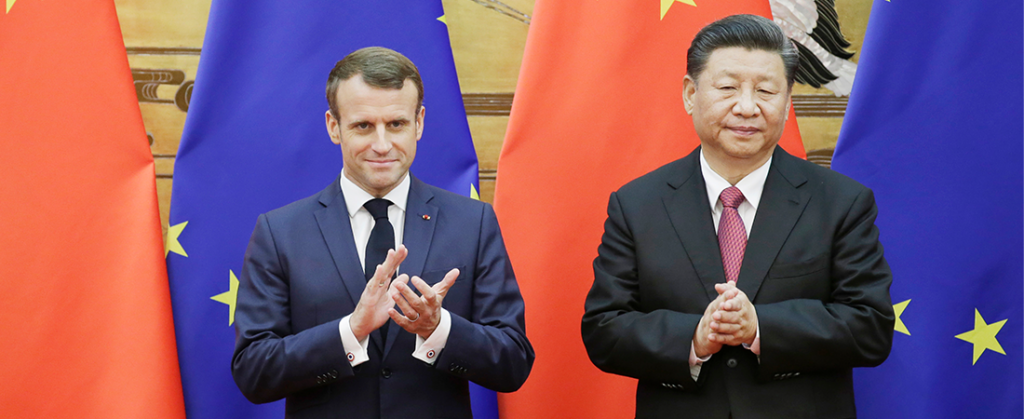
The scale of what Europe is now confronting is significant. Russia has allegedly recruited MEPs as influence agents, financed far-right groups, and orchestrated disinformation campaigns across the continent, building, over the better part of a decade, a network of political proxies throughout Europe, many of them on the far right. The examples are no longer abstract.
In Romania, a far-right, pro-Russian challenger surged unexpectedly in the first round of the presidential election, running a campaign centred on TikTok with opaque financing. In Georgia, the ruling party co-opted Russian disinformation tactics to push anti-EU narratives, ultimately suspending the country’s EU accession. In Moldova, the Kremlin invested heavily in vote-buying and subversion against a pro-European president.
In France, VIGINUM, the government agency responsible for identifying foreign digital interference, documented a vast Russian disinformation campaign consisting of nearly 200 websites disseminating pro-Russian narratives across Europe. Yet every attempt at regulation collides with accusations of censorship, a paralysis that is itself a victory for those seeking to exploit it. In the United Kingdom, Russian money flowed into the political system for years, and the Brexit campaign exposed the vulnerabilities of a country that had long assumed it was immune. Across Germany, fake accounts disseminated over a million German-language messages criticising the government’s support for Ukraine, revealing the interconnections between far-right, far-left, and pro-Russia information ecosystems.
European institutions are scrambling to respond. New legislation, special parliamentary committees, task forces, and the machinery of reaction are grinding into motion. But machinery is not muscle memory. And that distinction matters enormously.
The veterans of this war
African governments and civil societies have been navigating exactly this kind of sustained interference for decades. The architecture of foreign manipulation on the continent is not new; it predates Russia and China by generations.
Former colonial powers perfected the art of nominal independence: governments that were sovereign in name, but whose cabinets, currencies, and military decisions remained subject to external veto. France’s relationship with Francophone Africa, the financing of loyal leaders, the discreet removal of disloyal ones, and the parallel networks of influence that operated beneath the surface of diplomatic normality, is the best-documented example of a model that was, in essence, narrative and political manipulation at the state level. Chinese economic leverage, paired with narrative pressure, is a more recent iteration. Russian influence dressed as solidarity with the post-colonial South is currently the most visible.
What all these actors share is an understanding that the information environment is a battlefield, not a commons. African governments and civil societies learned this the hard way. Fragmented media ecosystems where institutional trust was never a given. Information environments where the line between political communication and foreign manipulation was always blurred. They did not have the luxury of assuming the world was benign.
The resulting trajectory is visible and instructive. In sub-Saharan Africa, what began as covert influence and insidious narratives seeded during election campaigns has, in several countries, become the dominant register of political discourse. Leaders who once borrowed talking points strategically now deploy them openly, as their own. The progression from hidden influence to normalised narrative is not inevitable. But it is a path. Europe would do well to study it carefully, because the early stages of that trajectory are no longer a distant phenomenon.
The right kind of partnership
As Europe searches for coalitions against authoritarian interference, it is rightly looking to the Global South as a strategic partner. The logic is sound: shared exposure to the same actors, aligned interest in an international order based on rules rather than raw power.
But there is a version of this partnership that will fail, as previous ones have. It is the version built on the assumption that the West brings the expertise and the South brings the numbers, that this is, once again, a relationship between teachers and pupils. That framing is not merely inaccurate. It reproduces, in the language of partnership, the same logic of dominance it claims to have left behind. It actively prevents Europe from accessing the most valuable asset its potential partners hold: hard-won experience in the very battles Europe is now entering.
What genuine exchange looks like in practice is not complicated to imagine. Shared early-warning mechanisms for detecting coordinated inauthentic behaviour, drawing on monitoring infrastructure already built by civil society organisations in West Africa and the Sahel. Structured dialogue between European regulatory bodies, African electoral bodies and civil society organisations that have spent years on the front lines of information warfare. Joint narrative resilience programmes that bring together communicators who have operated under sustained information attack with those who are only now designing their defences.
These are not gestures of solidarity. They are strategic investments. The expertise exists. The question is whether European institutions are prepared to look for it in unfamiliar places.
What comes next
The old playbooks, built on linear assumptions, stable institutions, and the quiet confidence of those who have never been seriously targeted, are fading fast. The communications and advocacy professionals who will matter in the next decade are those who can operate in environments where nothing is stable, trust is scarce, and the information battlefield is permanently contested.
That is a description of what practitioners across Africa, the Middle East, and South Asia have been managing for years. The question is whether Europe will recognise this before the lesson becomes unavoidable.
Eleven years ago, a roadside shack in Madagascar charged phones and sold Coca-Cola. It wasn’t behind. It had simply solved a different problem, differently, before we knew the problem existed.
Alexandre Cougoulic is a Partner at Portland Communications, where he leads the International Development practice across London, Paris, and Nairobi.